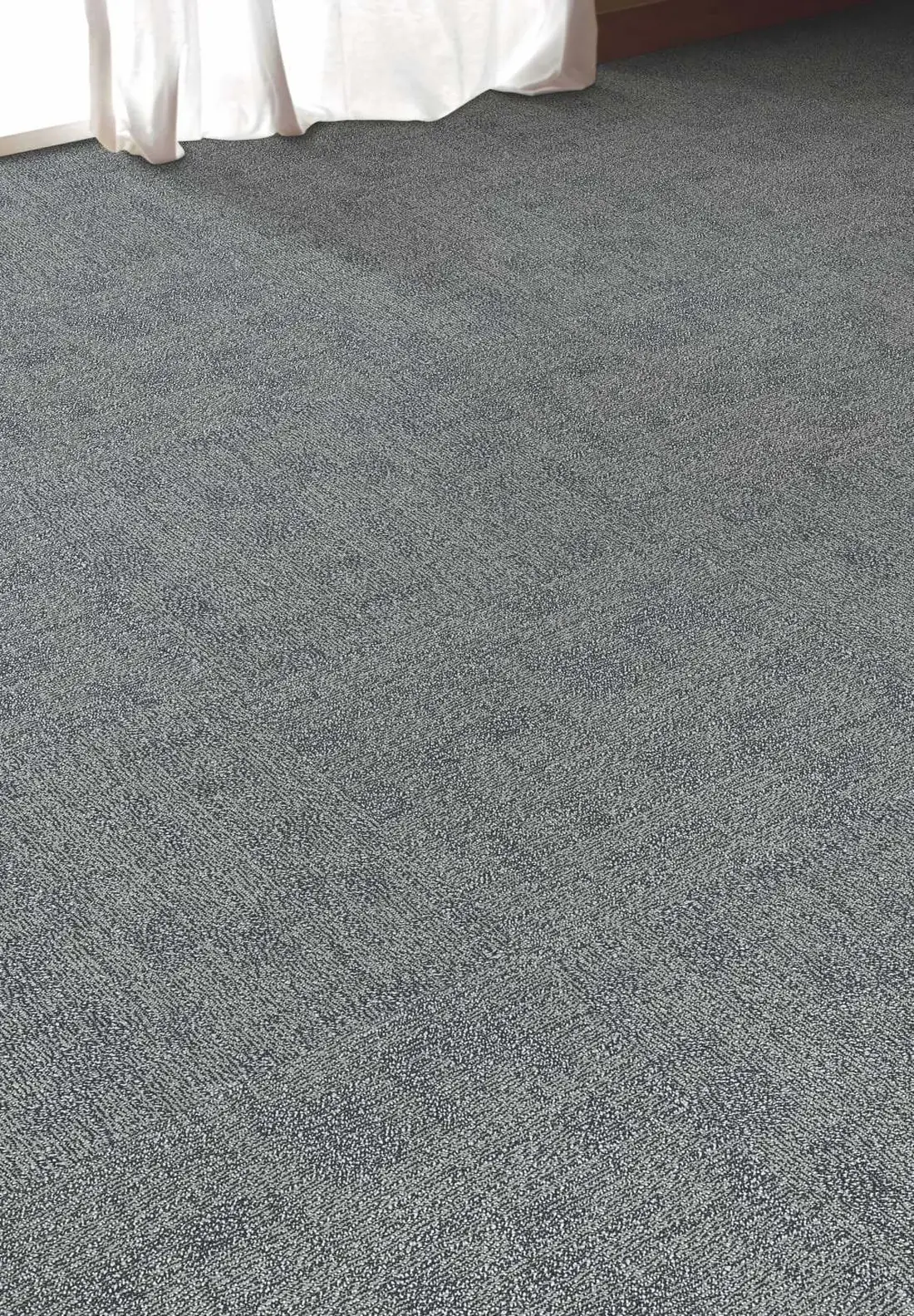
2026 Rug Trends for Hospitality and Commercial Projects
A buyer’s guide to 2026 rug trends, custom area rugs, hotel carpet, and commercial flooring—from warm colors and tactile textures to material and sourcing checks.
 Hanto Editorial TeamCommercial Flooring Content Team
Why 2026 rug trends matter to buyers
A rug can be the quietest item in a room or the detail that makes the entire scheme memorable. In 2026, both roles are gaining attention. Recent rug-show coverage points to a mix of modern heritage, green and warm palettes, tactile flatweaves, and confident geometric layouts. At the same time, flooring trade events are giving more space to product knowledge, material innovation, and sustainable solutions. Together, those signals suggest a useful direction for retailers, hospitality teams, designers, and commercial project buyers: treat the surface as a design decision and a specification decision at the same time.
This guide translates those signals into practical choices for custom area rugs, hotel carpet, carpet tiles, and commercial flooring. It is written for people who have to turn an attractive image into a sample, a quote, a production brief, and a floor that works after opening day. Trends are not guarantees of future demand, and no single palette suits every market. Use them as prompts for testing, merchandising, and discussing options with a qualified supplier.
Hanto Carpet’s site is organized around exactly the product questions buyers face: area rugs, carpet tiles, hotel and commercial carpet, custom size and color services, OEM and private-label manufacturing, and sourcing guidance. That makes a trend-led brief most valuable when it specifies the customer, setting, construction, size, quantity, performance needs, and destination market—not just a color name.
Read the market signals carefully
A trend report is a snapshot, not a purchase order. The September 2026 preview from COVER Magazine’s COVER Connect New York coverage highlighted five visible directions in the rugs presented for the event: modern heritage, green, warm shades, flatweave textures, and Bauhaus-inspired squares. The value for a buyer is not to copy five looks at once. It is to notice the common thread: familiar references are being refreshed with color, surface, and geometry, while rugs are being discussed as authored design objects rather than anonymous accessories.
At the industry level, Messe Frankfurt described the 2026 Heimtextil Carpets & Rugs program as spanning techniques and channels, with an expanded product range and a new Future Floor area for expertise, trends, and sustainable material solutions. That is a signal that buyers increasingly need to connect aesthetics to knowledge about production and materials. The ASID 2026 Trends Outlook summary also describes designers responding to clients who are more selective and value-conscious, with greater attention to performance, well-being, flexibility, and long-term value. These sources cover different parts of the market; none predicts what every customer will buy.
For a buyer, a sensible response is to separate three questions. First, is the look relevant to the intended customer and setting? Second, can the construction meet the expected traffic, cleaning routine, and replacement plan? Third, can the supplier document the specification and repeat it consistently? The sections below address those questions in that order.
Modern heritage makes familiar patterns feel current
Modern heritage describes the use of recognizable design references—florals, latticework, medallions, borders, or motifs associated with older carpets—in a composition that feels right in a contemporary space. It is not simply an antique look. Scale, contrast, negative space, and color can all be adjusted so a traditional reference supports modern furniture and architecture instead of competing with them.
For a retailer, this direction can be useful because customers often want something with character but still need the rug to coordinate with existing furniture. A washed pattern, a quieter border, or a limited palette can make a familiar motif easier to merchandise across room styles. A designer might specify a more legible repeat for a large open room, then use a subtle tonal variation in a smaller lounge. If the design is being adapted for a private label, ask the manufacturer to confirm how the artwork translates into the intended construction. A printed image, a woven design, and a tufted design can express the same drawing differently.
For a hotel or commercial interior, heritage cues can communicate place, warmth, or continuity without relying on literal themed décor. Use the pattern where guests can appreciate it: a reception zone, a lounge, or a feature area. For corridors and other hard-working spaces, the repeat should be evaluated alongside cleaning, seam, and replacement requirements. A design that looks balanced on a small screen can become too busy when repeated across a long run. Review a full repeat at actual or representative scale before approval.
Buyers commissioning custom area rugs should prepare source artwork and references with clear usage rights, target dimensions, and a maximum number of colors if a defined color count matters to the process. Ask for a strike-off or production-representative sample and identify what may change between a screen proof and a physical surface. Confirm whether the border, fringe, backing, and pile direction are part of the approved sample. These details keep a modern-heritage concept from drifting during manufacture.
Greens and warm neutrals add emotional depth
Green, terracotta, rust, clay, tobacco, ochre, and warmer neutrals appear frequently in current rug conversation. These colors can connect a room to landscape and natural materials, but their success depends on surrounding finishes and lighting. A muted olive in a sunlit room may read very differently under a warm hotel downlight. A rust accent can feel inviting in a lounge and overly dominant in a compact guest room. Buyers should therefore treat color as a relationship between surfaces, not as a single swatch.
For a product range, warm neutrals can serve as commercial anchors while green, blue-green, or earth-red options provide more expressive choices. Consider building a coordinated palette with a light field, a middle tone, and a deeper accent. A dealer can then show customers related choices without asking a single design to do every job. For hospitality projects, think about how colors connect public spaces to guest rooms. A consistent undertone can create continuity even when the pattern scale changes.
Color consistency is a manufacturing and quality-control issue as much as a creative one. Ask how the supplier defines the approved color standard, what lighting is used to review it, and how production lots are checked. If a project combines carpet, rugs, wall coverings, upholstery, and paint, send physical references where possible. A digital value is helpful for communication but cannot by itself guarantee that different fibers or manufacturing processes will appear identical. Record any acceptable variation before production begins.
Think carefully before describing a palette as “natural” or “sustainable.” A color inspired by nature does not establish the environmental profile of the fiber, dyeing, backing, packaging, or supply chain. Keep visual language and environmental claims separate. If sustainability is part of the buying requirement, specify the evidence needed—such as material composition, recycled-content documentation, relevant test reports, or third-party certifications—and verify that the documents apply to the offered product and production location.
Texture, flatweaves, and layered surfaces
Tactility is one of the clearest ways a rug can change the experience of a room without relying on a high-contrast print. Loop, cut pile, carved details, mixed heights, ribbed constructions, and flatweave structures each create different visual rhythm and underfoot sensation. A close tonal pattern can appear expressive when light moves across its relief. A flatweave can provide a more graphic, textile-like surface with less pile height. Those are distinct product propositions, so describe them precisely instead of grouping them under a vague “textured rug” label.
Texture should match the use case. In a quiet bedroom or residential living room, a deeper, softer surface may be appealing. In a hospitality corridor, rolling luggage, maintenance routines, and frequent footfall may favor a construction and pile profile selected specifically for those conditions. Restaurants have spill and cleaning considerations. Offices may value acoustics and the ability to replace a damaged zone. The right answer depends on the product’s tested specification, the subfloor, installation method, and maintenance plan. Trend language cannot substitute for those details.
Flatweaves can be useful where a lower profile, crisp pattern, or more immediate visual read is wanted. Before ordering, review edge finishing, dimensional stability, backing, and the appropriate underlay for the intended floor. A flat construction may behave differently on a smooth hard floor than on a carpeted surface, and a rug pad can affect both grip and feel. Ask the supplier for installation and care guidance rather than assuming that every flatweave can be treated the same way.
Layering rugs is another way consumers and designers are adding depth: a larger neutral base with a smaller accent piece, or a defined rug placed over broadloom. In a commercial setting, layering introduces practical questions about edge transitions, movement, accessibility, cleaning, and trip risk. If the visual idea depends on layering, test the actual combination in the room and obtain project-specific review from the design and facilities teams. The layered look should remain safe and manageable after the opening photography is finished.
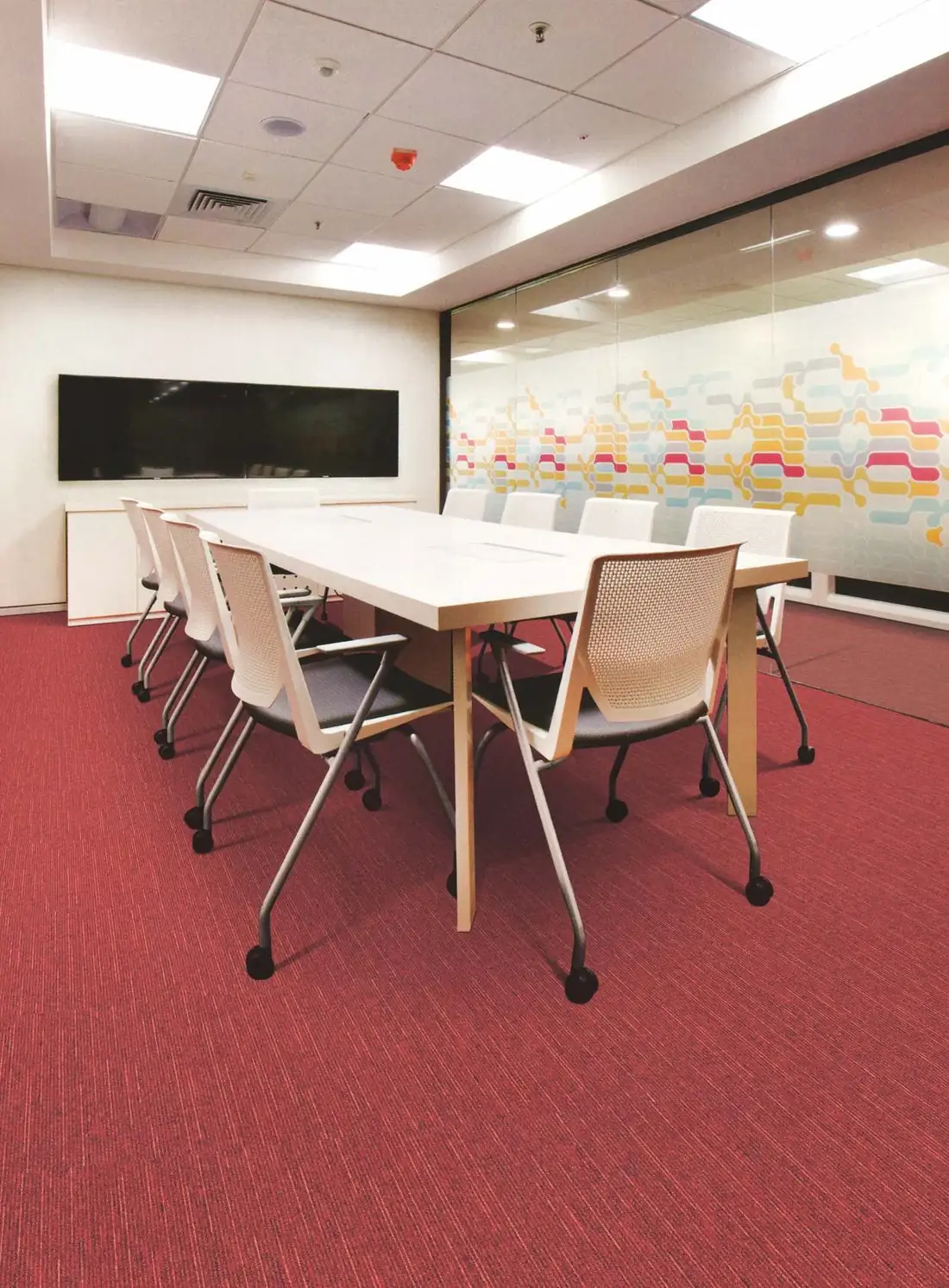
Geometric rugs and Bauhaus-inspired layouts
Squares, grids, stripes, and geometric blocks are perennial tools for organizing a floor. The renewed interest in Bauhaus-inspired forms points to a broader appetite for clear geometry and visual structure. For custom rugs, geometry can range from a precise checkerboard to an off-center field, an interrupted grid, or a border that appears to frame furniture. Strong geometry is especially useful in open-plan spaces because it can help define a seating group or circulation path without adding a wall.
Scale matters. A small, high-contrast square repeat can feel restless across a large floor, while a large block may lose its definition in a narrow passage. The geometry should be checked against furniture footprints and room proportions. In an office, a pattern can reinforce wayfinding if its direction and color transitions are planned with the actual plan. In a hotel, a geometric feature may provide an identifiable moment at the elevator lobby or lounge. In either case, maintain enough contrast for the pattern to remain legible under the installed lighting.
Use geometry in a way that respects installation. Broadloom seams, tile orientation, pattern repeat, cut boundaries, and waste allowances can influence the finished result. A custom designer should supply dimensions for the actual finished area and note any center points, alignment lines, or directional requirements. Ask for a layout drawing that shows repeat placement and seams. For carpet tiles, the installer should receive the recommended installation method and orientation instructions; a visual concept can change significantly when quarter-turn, ashlar, or monolithic placement is used.
In merchandising, a geometric pattern can be a strong hero image, but the product page should also show close-ups, scale references, and a room view. Buyers comparing custom rug suppliers need to understand both the design and the build. Presenting only a flat artwork can lead to false expectations about pile, relief, color, or edge definition.
Choose the right product for the project
The word “rug” can refer to a hand-tufted accent, a machine-made area rug, a logo mat, or a custom floor covering for a large contract space. Product choice should follow the use and procurement route. A custom area rug may be the best option when the plan requires a defined size, shape, border, or brand palette. A custom hotel carpet brief should account for guest experience, public-area traffic, cleaning, and replacement strategy. A carpet-tile specification may be attractive where access to the floor, localized replacement, or modular planning matters.
Carpet tile and broadloom carpet are not interchangeable simply because each covers a floor. Their installation systems, seam logic, access requirements, waste profile, repair approach, and visual continuity differ. Hanto’s guide to carpet tiles versus broadloom carpet is a useful starting point for deciding which format belongs in an office, hospitality zone, or other commercial setting. The final specification should still reflect the project’s subfloor, room dimensions, maintenance resources, and technical requirements.
Logo rugs and branded floor graphics require extra attention to edge definition, minimum detail size, color matching, orientation, and approval rights. Ask whether fine lines or small lettering can be reproduced in the proposed technique. Review the graphic at a realistic size, not only zoomed in on a monitor. The logo owner should sign off on a proof before production. For projects with multiple entrances or store locations, define whether each rug uses the same dimensions and logo proportions or is being adapted to each site.
Specify materials by use, not by headline
Material selection is often simplified into natural versus synthetic, premium versus value, or wool versus recycled yarn. Those comparisons are too broad to make a sound purchase decision. Fiber, yarn construction, pile density, backing, dye system, installation, traffic, cleaning chemicals, and exposure all contribute to performance. Ask the manufacturer for product-specific data and clarify which construction the evidence covers. A name such as wool, nylon, polypropylene, polyester, jute, sisal, or recycled PET describes only part of the build.
Wool is valued in many applications for its natural character and appearance, while synthetic fibers are selected for a range of project needs. The useful question is not which family is universally best; it is which verified construction satisfies the project’s requirements and budget. Recycled-content options also need careful reading. Establish whether the recycled input is in the face fiber, backing, or another component, and whether the stated percentage is by weight or applies to a specified part of the product. Ask for supporting documents rather than relying on a general label.
For wet areas, outdoor use, or spaces exposed to sunlight, verify that the proposed product is suitable for the particular exposure and cleaning conditions. Do not assume a fiber’s behavior from its category name. For hospitality and commercial projects, ask for relevant test results and installation recommendations. If a buyer has a specified standard or certification requirement, share it before sample selection so the offered product can be checked against it early.
Environmental claims should be specific and supportable. Questions worth asking include: What is the exact fiber and backing composition? What percentage is recycled and how is it calculated? Is the product designed for disassembly or take-back? Is the evidence product-specific and current? Does the claim apply to the same colorway, size, and backing being quoted? Heimtextil’s 2026 Future Floor program explicitly grouped trends and expertise with sustainable material solutions, reflecting why material information is now part of the commercial conversation. Buyers can use that momentum to request clearer documentation without assuming that every product marketed as green has the same environmental profile.
Maintenance is part of material choice. Obtain a care schedule, recommended cleaning methods, spot-treatment guidance, and any restrictions on chemicals. Clarify who will maintain the floor and whether the plan matches their equipment and staffing. A material that looks excellent at handover but requires an unavailable cleaning process is not a practical specification.
Get size and layout right before quoting
Custom rugs are often quoted from a nominal room size even though the actual finished area, door clearances, furniture, and circulation determine the useful dimensions. Measure the space on site where possible. Mark the dimensions of the furniture group, the direction of travel, door swings, and any fixed elements such as columns, floor outlets, or built-in cabinets. For a custom-shaped rug, provide a scaled drawing with an origin point and clear dimensions instead of relying on a freehand sketch.
Define whether measurements are finished dimensions or approximate estimates. Confirm tolerances, edge finishing, and how the supplier handles a rug that must fit between fixed architectural features. If a floor has a repeating carpet design, provide the overall area and the preferred starting point. Pattern repeat can affect both appearance and material usage. Ask how seams, borders, and transitions will be handled and include them in the shop drawing.
For carpet tiles, record the room dimensions and the selected tile size, then determine the layout and cut requirements. Extra stock may be needed for future maintenance, but the amount should be set with the project team and supplier based on the product and installation plan. For hotel corridors, guestrooms, and meeting rooms, map transitions and doorways early. A few minutes spent coordinating drawings can prevent late-stage changes to quantity, color, and schedule.
Custom size service is most useful when the brief describes why a non-standard size is needed. Explain whether the goal is to align with a furniture arrangement, cover a specific floor area, create a runner, or produce a coordinated set. Where several sizes form one collection, document which design elements are fixed and which can be rebalanced. A medallion or border may need optical adjustment when moved from a 2-by-3-meter rug to a large lobby piece.
Sample and approve the real surface
Samples turn a concept into a decision. A useful sample process includes the base material, construction, pile or surface, backing, edge, and color—not just a digital image of the artwork. If the final order will be made in several colors, test the key colors together. Review the sample in the intended room under the lighting that will be used there. Look at it from standing height and from the distance at which guests or customers will first see it.
Record the sample’s version, date, and approval status. Save a signed or otherwise clearly approved reference for both the buyer and supplier. Identify any acceptable variation in shade, dimensions, or surface, and agree on how a production concern will be raised. For a repeat program, ask how future orders will be compared to the reference and whether dye lots or raw materials can change. A well-managed sample approval reduces ambiguity across design, procurement, and factory teams.
Photography is helpful for product discovery, but it is not a replacement for tactile review. Camera exposure, screen settings, image compression, and lighting can alter how a color appears. Product images should therefore be paired with an accurate specification and a sample option where available. Retailers can improve online merchandising with detail photography, a scale image, and a plain-language description of pile, backing, and care.
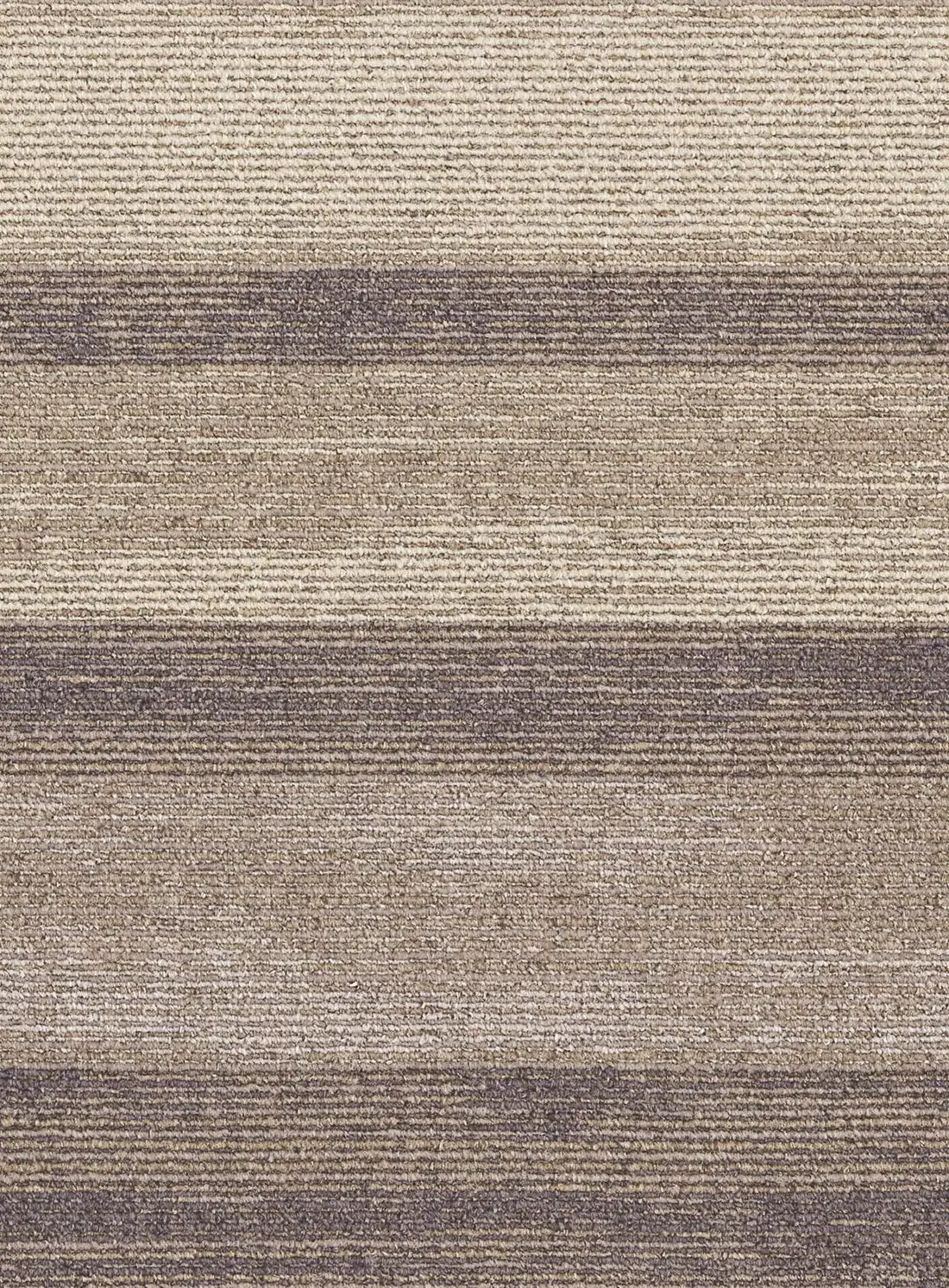
A procurement workflow for custom rugs
A reliable custom-rug project moves through a sequence of decisions. It does not start and end with an inspiration image. The following workflow helps importers, hospitality buyers, dealers, and contractors keep the design intent and the specification connected.
1. Write a brief the supplier can price
State the product type, intended setting, finished size, quantity, target delivery window, destination country, and installation context. Identify whether the order is for retail stock, a private-label line, or a one-time contract project. Include reference images or artwork with notes on what is essential and what can be adapted. If the brief needs multiple sizes or colorways, list each one separately. A supplier can respond more accurately when the buyer states priorities such as appearance, maintenance, lead time, price range, or required documents.
2. Confirm construction and documentation
Ask the supplier to describe the proposed construction in terms the project team can compare. Clarify fiber, pile or surface type, backing, edge finish, dimensions, weight if relevant, and any project-specific test data. Ask which options are actually available for the quoted item. A catalog photograph does not prove that every pictured combination of color, backing, or size can be produced. If the order has compliance, certification, or environmental requirements, provide those at the inquiry stage and agree what evidence is acceptable.
3. Review artwork and layout
Approve the drawing and repeat layout before a physical sample is made. Check logo proportions, borders, pattern scale, orientation, and how the design meets edges or seams. For a large area, review the layout at a scale that shows where motifs will land relative to furniture and circulation. When the design uses a subtle tonal contrast, request enough surface area to judge the effect rather than relying on a tiny color chip.
4. Approve the sample and commercial terms
Record the approved color and construction reference. Confirm the order quantity, packaging, carton or roll information, incoterms, payment milestones, production schedule, inspection plan, and shipping responsibilities with the supplier. These are commercial terms that both parties should review explicitly. Where a buyer uses an inspection company or project consultant, define the inspection scope before production so that everyone understands what will be checked.
5. Plan installation and aftercare
Confirm the installation method, direction, seam plan, floor preparation, transition details, and cleaning guidance with the appropriate project professionals. For rugs, check the underlay and edge placement. For modular carpet, retain the layout and orientation record, plus any agreed spare stock. Keep the final specification and care document accessible to the facility or store team. A product program is easier to repeat when its approved sample, artwork, dimensions, and maintenance notes are stored together.
If you are requesting a quote for custom rugs, use Hanto’s custom rug design process page to understand the design discussion and send the important details through the inquiry form. An accurate first brief usually creates a more useful conversation than an initial “How much?” message with no size, quantity, or destination.
Common buying mistakes to avoid
Choosing from a trend image alone. Inspiration photographs often show a curated room with specific light, furniture, and camera settings. Extract the qualities that matter—color family, repeat scale, texture, or mood—then choose a construction and physical sample suited to the actual project.
Using the same specification in every space. A guestroom, restaurant, office, corridor, and residential lounge have different traffic and maintenance patterns. Use zones to define requirements; do not copy one material specification across a building simply because the palette is consistent.
Approving an artwork without a production-scale review. Tiny lettering, fine lines, and intricate details may not translate exactly into every pile or weaving technique. Ask the manufacturer to show how the design will be made and approve a realistic sample before releasing the order.
Assuming a material label is enough. Ask for the composition, construction, care instructions, and evidence tied to the exact product. “Wool,” “recycled,” or “commercial grade” by itself does not answer every performance or environmental question.
Leaving size and installation until late. A late measurement can change quantities, pattern placement, seams, and delivery timing. Include a floor plan and coordinate installation details before production begins.
Overlooking reorders. A custom product may be successful enough to reorder months later. Save the approved sample and note the key product identifiers, color references, dimensions, and tolerances. Ask the supplier how future orders can be matched and whether any component has a limited availability window.
Questions buyers ask about 2026 rug trends
What rug colors are popular in 2026?
Recent design coverage has highlighted greens, warm neutrals, and earthy shades alongside heritage patterns and graphic geometry. Treat these as useful starting points, then compare the palette with your customer base, local market, furniture, lighting, and project identity. A trend-led collection should still include dependable colors that customers can use easily.
Are custom area rugs suitable for commercial projects?
They can be, when the construction, backing, edge, dimensions, installation, and care plan are appropriate for the project. Discuss the intended footfall and cleaning routine with the manufacturer, request product-specific information, and involve the project’s flooring professional where necessary. “Custom” describes flexibility in design; it does not automatically mean a product is suitable for every commercial use.
Which is better: carpet tile or broadloom?
Neither is universally better. Modular tile can support localized replacement and certain access-floor or planning needs. Broadloom can provide a more continuous surface for some spaces. Compare the installed system, appearance, seams, waste, repair process, cost, and maintenance requirements for the exact project. Use a measured plan and review a sample installation when the decision has a major visual or operational impact.
How can I check a sustainability claim?
Ask what the claim refers to, which product component it covers, how the percentage or result is calculated, and what current documentation supports it. Check that the evidence matches the offered product configuration and ask about end-of-life or take-back options only if they are available for the specific market. Avoid making environmental claims in marketing unless the supporting information is clear and approved for use.
What should I send for a custom rug quote?
Send the product type, finished dimensions, quantity, target use, desired material or construction if known, artwork or reference, destination country, required delivery window, and any technical, certification, or packaging requirements. For a commercial project, include a floor plan or zone schedule. State what is fixed and where you are open to the supplier’s recommendation.
A trend is useful when it becomes a clear brief
The strongest rug ideas for 2026 are not limited to a single color or pattern. The market conversation is bringing together character-rich heritage references, greens and warmer shades, more tactile surfaces, clear geometry, and closer attention to how flooring is made and maintained. That combination creates room for both expressive residential rugs and practical hotel or commercial carpet—provided the look is translated carefully for its setting.
For buyers, the repeatable advantage is process: choose a product format that fits the space, prepare a precise size and design brief, ask for product-specific information, approve a physical sample, and coordinate installation and aftercare. For manufacturers and dealers, that process makes it easier to turn a current design direction into a product customers can understand and reorder. Explore Hanto’s custom color rugs, custom pattern rugs, custom size rugs, and carpet tile options, then send the intended use and project details for a tailored discussion.